

Summer is here, and so is the heat! The last thing you want is for your air conditioning unit to break down, leaving you sweating in the heat. If your AC is not working properly, don’t worry – there are some DIY fixes you can try before calling a technician. In this blog post, we will go over some tips and tricks for homeowners to troubleshoot common AC issues like not cooling, water leaking, making noise, and more.
We’ll cover everything from checking the indoor air handler to cleaning the outdoor compressor. Plus, we’ll provide step-by-step guides to help you fix most common AC service failures. With our help, you can get your AC up and running again in no time!
DIY AC Repair Tips for Homeowners
Troubleshooting and maintaining your cooling system can be challenging, but with these DIY AC repair tips for homeowners, you can make life easier. Troubleshoot common AC problems like a malfunctioning thermostat or a dirty air filter with ease. It’s essential to take proper safety precautions when attempting DIY repairs. Clean and maintain your AC unit regularly to prevent future problems. Remember, calling in a professional for more serious issues is always an excellent idea.
How to Troubleshoot AC Not Working
Troubleshooting issues with your home Air Conditioning repair DIY requires identification of several common problems such as cooling issues caused by a malfunctioning thermostat or clogged air filter.
Additionally, checking wiring, voltage, condenser coils, fan motors, evaporator coils and fins can help diagnose issues. Inspect the refrigerant levels for low refrigerant or leaks caused by algae build-up in your drain line. Cleaning or replacing air filters regularly can improve airflow while fan blades can be cleaned using a vacuum cleaner or a screwdriver.
Contact our professional HVAC technician to help if you’re unsure of any diagnosis.
AC Not Cooling: What to Do
If your air conditioning system is not cooling as expected, there are several things you can try before calling an HVAC technician for help. Start by cleaning or replacing your air filter to ensure proper airflow.
Additionally, inspect your outdoor condenser unit for any debris or dirt buildup that may be blocking airflow. Check the thermostat settings and adjust them if necessary. Lastly, verify that your refrigerant levels are sufficient; low refrigerant levels can lead to poor cooling performance. Remember to take proper safety precautions when attempting any DIY repairs.
Central AC Not Working: What to Check
Is your central air conditioning system not working? Start with checking the thermostat settings to ensure they’re set to cool and that the temperature is lower than in the room. Next, examine your air filter and replace it if necessary. Check your circuit breaker or fuse box for blown fuses or tripped breakers. Afterward, investigate your outdoor
AC unit for debris blocking airflow. Lastly, verify that your refrigerant levels are adequate but seek professional help if they’re not. Remember these steps to get your AC back up and running smoothly.
Indoor Air Handler: How to Check
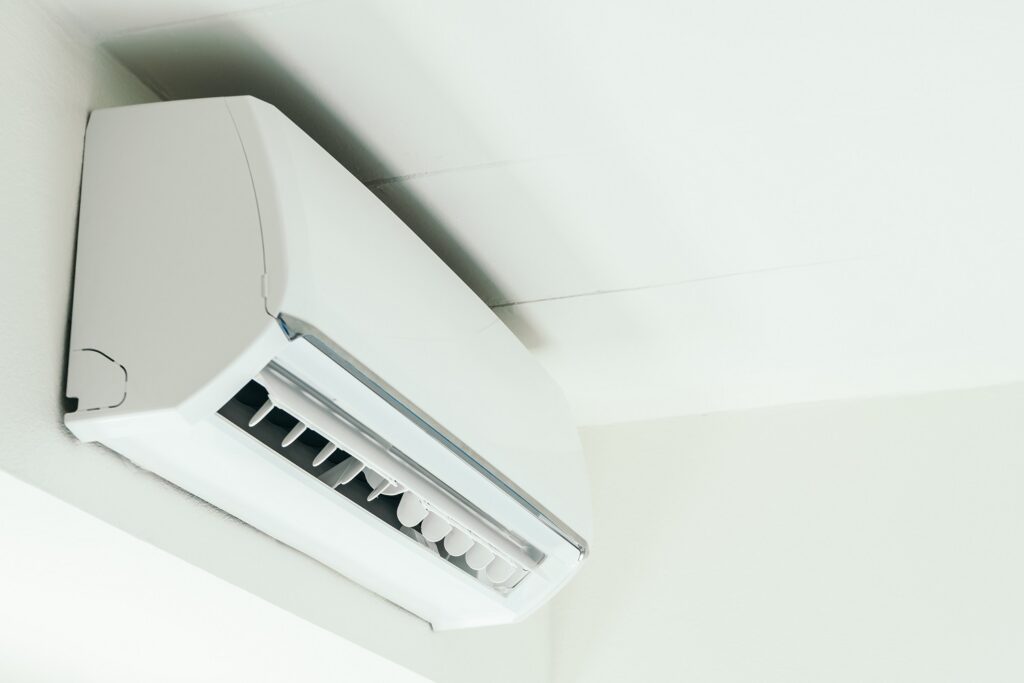
To ensure your home’s cooling system works efficiently and effectively during hot summer months without paying costly repair fees to HVAC technicians every year, regular maintenance is crucial. While checking your indoor air handler for any issues such as poor airflow or insufficient cooling, it’s important to keep in mind a few tips.
Start by inspecting the air filter for potential clogs that might obstruct airflow. Next up is examining the evaporator coil for any signs of dirt or debris buildup that could prevent proper cooling.
Lastly, check the blower motor and fan belt for wear and tear which can cause issues with air circulation. By following these easy steps you’ll be able to keep your unit running smoothly without spending a fortune.
Ice in AC Air Handler: How to Fix
If your air conditioner is not cooling effectively because of ice buildup in the air handler, don’t worry; you can fix it yourself using some DIY techniques. First of all, turn off the AC and wait for the ice to melt entirely before attempting any repairs. After that, check for a dirty or clogged air filter and replace it if necessary.
Suppose refrigerant levels are low; in that case, it’s best to contact an HVAC technician who can add more refrigerant to your system. Additionally, ensure that there are no obstructions in your vents and ducts for proper airflow.
Clearing Condensate Drain: DIY Guide
To clear a clogged condensate drain in your central air conditioning system at home, you need to locate the drain line first. Start by turning off your AC, then detach the drain line from the condenser unit. Clean it with either a wet/dry vacuum or a mixture of vinegar and hot water to remove algae buildup.
If necessary, you can recharge your AC unit’s refrigerant levels with a low-refrigerant kit. After cleaning, reattach the drain line to its terminal point and turn on your air conditioning system to check if there is proper airflow.
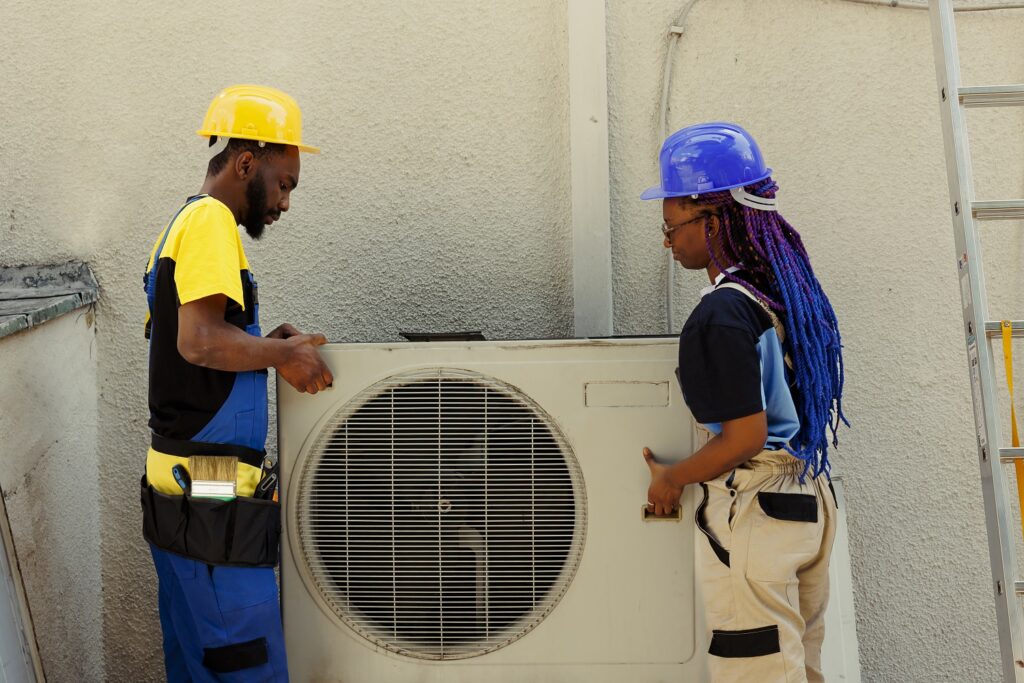
Checking & Cleaning AC Compressor: Outdoor Unit
Maintaining optimal airflow and preventing overheating are critical aspects of home air conditioning repair DIY. Checking and cleaning your AC compressor is one such step that can help achieve this objective. Start inspecting your AC compressor for any debris or visible damage.
Cleaning the compressor coils regularly also helps improve airflow and prevent overheating. It’s important to turn off power before attempting any DIY repairs or maintenance on your AC unit. If you’re not confident about repairing your AC unit yourself, calling a professional HVAC technician is advised.
Air Conditioner Not Blowing Air: DIY Fixes
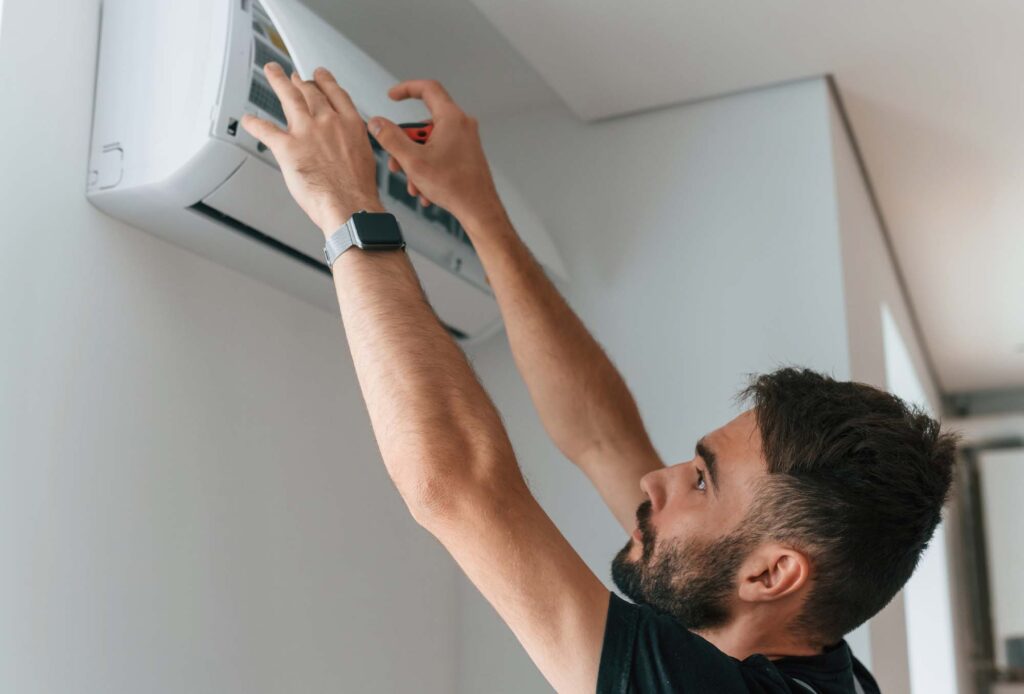
If you’re experiencing issues with your cooling system at home and it isn’t functioning properly by blowing cool air out of your vents as it should be then don’t worry! There are things you can do before calling in an HVAC technician that is sure to fix the problem for you. Firstly make sure to check your air filter and replace it if necessary.
After that try checking your thermostat settings to ensure they are set properly. Finally take some time cleaning both the evaporator coil and condenser coil for better airflow. If none of these work then there may be a bigger underlying issue that needs professional attention.
Air Handler Not Blowing Air Properly
If your home’s air handler is not blowing air properly, it could be due to several issues. One common cause is a dirty air filter, which restricts airflow and decreases energy efficiency. Another potential culprit is a faulty motor or clogged ductwork, which may require the expertise of an HVAC technician to diagnose and repair.
To prevent these issues, homeowners can regularly replace their air filters and schedule routine maintenance for their HVAC systems. Ensuring proper airflow and functioning of the heating and cooling system components like evaporator coils, condenser coils, fan motors, thermostats, circuit breakers, capacitors etc. are all crucial for optimal performance.
How to Replace AC Blower Belt
To replace your AC blower belt at home, switch off power to your system and remove its access panel to locate the blower assembly. Using a screwdriver, loosen the bolts that hold the motor in place and remove your old belt. Then, install a new one and carefully tighten everything back up without overdoing it.
AC Blower Hums But Doesn’t Run: DIY Guide
If your AC blower is humming but not running, there are a few DIY troubleshooting steps you can take before calling in a professional HVAC technician. Before attempting any repairs, turn off the power and consult your owner’s manual. Common causes of this issue include problems with the capacitor or blocked air filters.
Try cleaning or replacing your air filter first to see if that fixes the issue. Checking for loose wiring connections and testing your capacitor are also important steps. If you’re still having trouble after trying these fixes, it’s best to contact our HVAC repair specialist who can help diagnose and fix any underlying issues.
AC Air Handler Doesn’t Run: What to Do
If your home Air Conditioning repair DIY skills are put to the test when your AC air handler doesn’t run, then don’t panic. Start by checking the air filter to ensure adequate airflow and replace it if necessary. Next, examine all wiring and connections for any signs of wear or damage that could disrupt proper functioning of the unit. If you’re unable to resolve the issue on your own, then consider seeking help from an experienced HVAC technician who can diagnose and repair more complex electrical faults in your cooling system.
Water Leaking from AC? How to Fix it
If water is leaking from your AC, turn it off to prevent additional damage. Check for a clogged condensate drain line and replace any damaged drip pans. If the issue persists, seek professional repair as it may be due to a refrigerant leak or damaged coil.
Water at Base of the Air Handler: How to Stop it
To troubleshoot water at the base of the air handler in your home Air Conditioning repair DIY project, start by turning off and unplugging your AC unit. Check for dirty air filters that might restrict airflow and cause leakage, and clear any obstacles in your condensate drain line with a screwdriver or hose.
If these DIY measures don’t work, contact an HVAC technician to troubleshoot issues with your compressor, evaporator coil, refrigerant levels, wiring or insulation. Don’t let moisture damage your heating and cooling system! (93 words)
AC Makes Noise? Here’s What to Do
If your AC is making noise, turn it off to avoid worsening the issue. Look for any obstructions or debris around the unit and inspect the fan blades and motor for damage. If the problem persists, seek help from an HVAC technician for repair or replacement.
Air Handler or Furnace Makes Noise: Fixing Guide
Are you tired of hearing strange noises from your air handler or furnace? This common issue can arise due to several reasons such as loose parts, failing motors, or worn-out components. Begin by checking for visible damage and tightening loose parts with a screwdriver or pliers.
Replace damaged components if necessary and always turn off the AC unit before attempting any repairs. For persistent issues, seek assistance from an HVAC technician to diagnose and repair the problem efficiently.
Don’t let noisy air handlers or furnaces disrupt your peace of mind – follow these simple steps to fix them!
Outdoor AC Compressor Makes Noise: How to Fix
If your outdoor AC compressor is making an unusual noise, start by identifying the type of sound it’s emitting. Whether it’s rattling, buzzing, or hissing, there are a few things you can do to resolve the issue without calling in a professional HVAC technician. Try cleaning any visible debris around the unit with a hose or screwdriver and tighten any loose parts.
If these steps don’t work and the noise persists, don’t hesitate to call in an HVAC expert for further diagnosis and repair. Remember to regularly clean your condenser coil and check refrigerant levels to prevent future problems.
How to Repair Most Common AC Service Failures
To repair your home air conditioning system at a DIY level, it’s important to be aware of the most common service failures that could occur in your central air system. Some of these can be resolved by simple actions like cleaning or replacing dirty filters, while others may require replacing a faulty capacitor or fixing wiring issues. Make sure you have all the necessary tools like refrigerant gauges and leak detectors before starting any repairs. Remember to prioritize safety above all else by turning off power before working on electrical components.
DIY Home Air Conditioner Repair: A Step-by-Step Guide
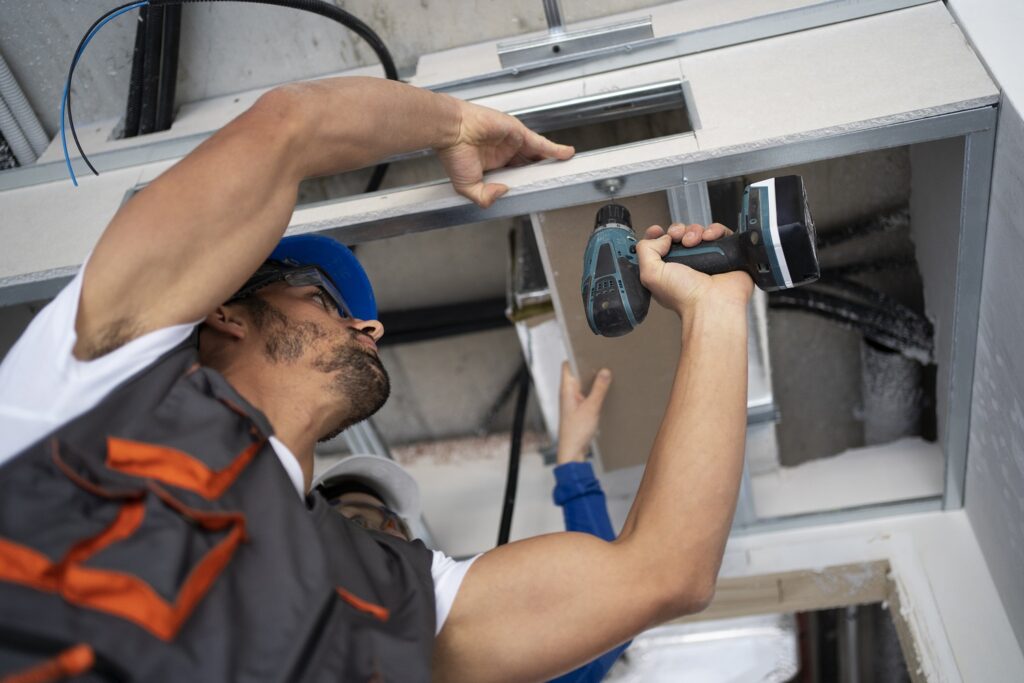
If your home air conditioning system isn’t cooling properly, there are some DIY steps you can take before calling an HVAC technician. Start by checking the thermostat settings, air filter cleanliness, and circuit breaker. If these don’t solve the issue, grab a screwdriver or pliers to check for loose wiring connections or replace the run capacitor or fan blade if needed. Remember to take appropriate safety precautions when handling electrical components.
Is Your AC Not Cooling? Learn the Anatomy of a Central Home Air Conditioner
To troubleshoot a central home air conditioner, grasp the basics of its anatomy – compressor, condenser, evaporator coil, and refrigerant lines. In case of cooling issues, check for dirty filters, clogged coils, low refrigerant levels or faulty thermostats. Be cautious with DIY repairs; follow guidelines and turn off power supply first.
Emergency AC Repairs: How to Find Local Contractors Near You
In case of an AC emergency requiring immediate attention from local AC repair contractors in your area that offer emergency services, you can begin by checking online directories or search engines. To ensure quality service delivery from the contractor you choose, it is important to consider looking at reviews and ratings before making the final call. It would also be useful to take recommendations from family members or friends who have previously used such services.
After shortlisting a few contractors based on these factors and their availability of 24/7 emergency services, contact them one-by-one to compare pricing and the range of services they offer.
Conclusion
DIY AC repair can save you a lot of money and is a good option if the problem is minor. However, there are certain situations where it’s best to call in a professional. Remember that safety should always be your top priority. If you’re unsure about anything or feel uncomfortable working with electrical components, it’s best to leave it to the experts.
But if you’re confident and have the right tools, our step-by-step guide on DIY home air conditioner repair can help you troubleshoot and fix common AC problems. And if you need immediate assistance, find local contractors near you who can provide emergency AC repairs. Don’t let a malfunctioning AC ruin your summer – take charge and get it fixed today!
